
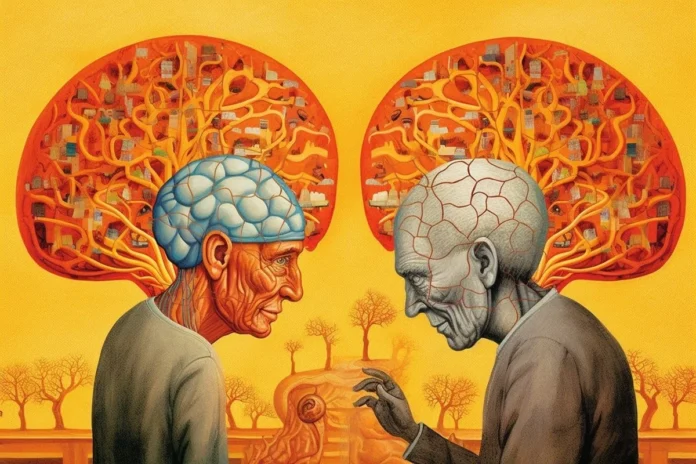
Why psychological outlook deserves a central place in dementia prevention
For decades, efforts to prevent dementia have largely followed a familiar script. Researchers hunt for harmful proteins, clinicians monitor inflammation, and public health guidance emphasizes diet, exercise, and medication. All of these matter. But they don’t tell the whole story. Increasingly, science is pointing to another, often underestimated factor that shapes brain health over time: our psychological outlook.
How we think, feel, and relate to our lives may influence dementia risk more than we once imagined. Far from being a soft or secondary consideration, psychological states such as optimism, conscientiousness, and—perhaps most powerfully—a sense of purpose are emerging as measurable contributors to cognitive resilience.
The overlooked link between mind and brain
Psychological traits are often treated as byproducts of biology rather than active players in it. In this view, personality and outlook simply reflect what is happening in the brain, not something that can meaningfully shape brain health. Yet a growing body of research challenges this assumption.
Recent longitudinal studies suggest that certain mental orientations are associated with a lower likelihood of developing dementia. For example, people who report higher levels of optimism appear to face significantly less risk of cognitive decline over time. Optimism, defined not as blind positivity but as a general expectation that good outcomes are possible, has been linked to healthier behaviors, lower stress responses, and improved cardiovascular health—all of which affect the brain.
Personality traits matter as well. Research published in leading neurology and aging journals has shown that individuals scoring higher in conscientiousness, extraversion, and positive emotionality tend to perform better on cognitive tests as they age. In contrast, high levels of neuroticism and persistent negative affect are associated with poorer cognitive outcomes. These patterns suggest that long-standing emotional and behavioral tendencies may subtly shape how the brain copes with aging-related stressors.
Purpose stands out
Among all the psychological factors studied so far, a sense of purpose in life appears to be especially protective. Purpose refers to the feeling that one’s life has direction, meaning, and value beyond day-to-day routines. It is not limited to career success or grand achievements; it can come from relationships, service, learning, or personal growth.
In one notable study published in The American Journal of Geriatric Psychiatry, individuals who reported a stronger sense of purpose had a markedly lower risk—up to 28 percent—of developing cognitive impairment. What makes this finding particularly striking is that the association held even among people with a genetic predisposition to Alzheimer’s disease. In other words, purpose seemed to offer a degree of protection beyond what could be explained by biology alone.
This does not mean that purpose “cures” or completely prevents dementia. Rather, it may act as a buffer, strengthening the brain’s resilience in the face of aging, stress, and disease-related changes.
Is purpose something we can build?
A common reaction to these findings is skepticism. Optimism, personality, and purpose can feel like fixed traits—things we either have or don’t, shaped by upbringing, culture, or circumstance. But research suggests this view is too rigid.
A person’s sense of purpose is surprisingly dynamic. Studies show that it can fluctuate from day to day and shift significantly across life stages. Importantly, it can also be cultivated. Small, intentional actions can strengthen the feeling that one’s life has meaning and direction.
Goal-setting is one well-supported approach. Working toward personally meaningful goals, and making progress on them, reinforces a sense of agency and purpose. Even modest goals—learning a new skill, improving health habits, or contributing to a community effort—can have psychological impact.
Practical ways to strengthen purpose
There is no single formula for building purpose, but several practices consistently show benefits across different populations:
- Volunteering: Giving time and effort to help others is strongly associated with greater purpose and optimism. Volunteering also increases social connection, another key factor in cognitive health.
- Mentorship: Sharing knowledge or skills with others—formally or informally—can reinforce a sense of usefulness and continuity, especially later in life.
- Role models: Identifying people you admire and consciously adopting aspects of how they structure their days or pursue meaning can provide direction and inspiration.
- Spiritual or religious engagement: For many individuals, participation in spiritual or faith-based communities offers a framework for meaning, reflection, and belonging.
- Reflection and gratitude: Regularly reflecting on what matters most, and acknowledging sources of gratitude, can shift attention away from stressors and toward values and purpose.
None of these practices require dramatic life changes. Their power lies in consistency and personal relevance rather than intensity.
Toward a more complete model of brain health
Dementia is complex, and no single factor determines who will develop it. Genetics, vascular health, lifestyle, education, and environment all play important roles. Psychological outlook does not replace these considerations—but it complements them.
What the emerging science suggests is that brain health should be viewed through a wider lens. The mind and brain are not separate systems operating in isolation. Psychological states influence stress hormones, inflammation, sleep quality, social behavior, and health choices, all of which feed back into neural health over decades.
Choosing to invest in one’s psychological well-being—by nurturing optimism, emotional balance, and especially purpose—may be a meaningful addition to traditional prevention strategies. At minimum, it reframes dementia prevention as not only a medical challenge but also a deeply human one.
As research continues to evolve, one message is becoming clearer: how we experience and interpret our lives may help shape how our brains age. Taking purpose seriously is not just a philosophical exercise—it may be a practical step toward protecting cognitive health.