
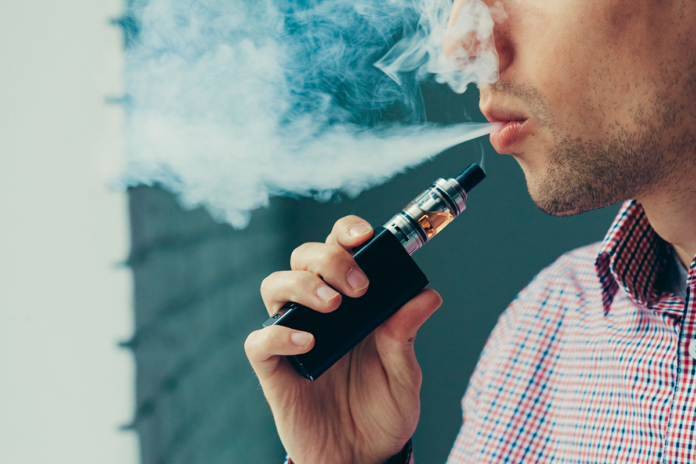
New consumer products often arrive faster than the science needed to fully understand them. E-cigarettes are a prime example. They spread rapidly, marketed as cleaner, safer alternatives to smoking, long before researchers had time to assess their long-term health effects. Years later, despite a growing body of research, much about vaping remains uncertain. As Carl Sagan famously warned, a lack of evidence of harm does not equal proof of safety.
What we do know is substantial—but incomplete. And in the space between knowledge and uncertainty, myths thrive.
The Known Facts—and the Gaps Between Them
Compared to traditional cigarettes, vape products appear chemically simpler. Conventional cigarettes contain thousands of compounds—estimates range from 6,500 to 7,000—many produced by combustion. E-cigarettes, by contrast, contain dozens of chemicals rather than thousands. That difference matters. But it does not make vaping benign.
Researchers have identified respiratory irritation, cardiovascular stress, and cellular inflammation among people who vape. These effects have been observed consistently across studies. What remains unclear is which specific ingredients or byproducts are responsible. Is it nicotine itself? Flavoring chemicals? Metals from heating coils? Or interactions among them? For now, science can describe the outcomes, but not fully trace their causes.
Nicotine vaping is also known to increase heart rate, raise blood pressure, and narrow airways—effects familiar from smoking. What is less clear is how these short-term physiological changes translate into long-term outcomes. Does vaping raise the risk of heart disease or cancer over decades? And if so, how does that risk compare to smoking? Definitive answers will require time that the product itself has not yet had.
Exposure doesn’t stop with the user. Cigarette smoke residue—often called “third-hand smoke”—can cling to furniture, clothing, and surfaces, posing risks to children and pets. E-cigarette aerosol also leaves behind residue, but the degree of harm, the chemicals involved, and how this exposure compares to traditional tobacco smoke are still poorly understood.
In short: we know vaping affects the body, but we don’t yet know the full cost.
Separating Popular Beliefs From Scientific Reality
Public conversations about vaping often swing between extremes. Let’s examine the most common claims.
Myth: Vaping is just harmless water vapor.
This is perhaps the most persistent misconception. While vaping does avoid smoke and combustion, it does not produce “vapor” in the everyday sense. It creates an aerosol—a cloud of tiny particles suspended in air. That aerosol can contain heavy metals, volatile organic compounds like formaldehyde and benzene, and other substances linked to cellular damage and cancer-related biological markers. The absence of smoke does not mean the absence of risk.
Partial truth: Vaping is safer than smoking.
There is evidence to support this claim—up to a point. Without combustion and many of the toxic byproducts found in cigarettes, vaping generally exposes users to fewer known carcinogens. People who vape instead of smoke often show lower levels of certain harmful chemicals in their bodies.
However, “less harmful” does not mean “safe,” and the comparison comes with important caveats. Vaping introduces its own unique risks. Many users engage in frequent, casual inhalation throughout the day rather than discrete smoking sessions, increasing cumulative exposure. Modern devices deliver nicotine efficiently and deeply, accelerating addiction. And because many products are loosely regulated, unapproved additives can—and have—entered the market. The 2019 outbreak of vaping-related lung injuries, linked largely to vitamin E acetate in illicit products, demonstrated how quickly these risks can escalate.
Compounding the issue, some products labeled nicotine-free have been found to contain synthetic nicotine analogs that may be more potent and potentially more toxic than nicotine derived from tobacco.
Possible truth, with conditions: Vaping helps people quit smoking.
This is where the evidence becomes more nuanced—and more hopeful. Several studies suggest that nicotine e-cigarettes may help smokers quit at higher rates than traditional nicotine replacement tools like gum or patches. Given how dangerous smoking is and how difficult it can be to stop, this finding deserves serious consideration.
Yet important limitations remain. E-cigarettes are not approved by the FDA as smoking cessation tools, no manufacturers are seeking such approval, and there are no standardized guidelines for their use in quitting. While they may help some people stop smoking, the long-term health trade-offs of switching remain uncertain.
Harm Reduction Is Not Risk Elimination
Ideally, people would quit smoking entirely without substitutes. In reality, addiction rarely yields to ideal solutions. For smokers who consider vaping as a quitting aid, experts emphasize caution and structure.
Dual use—smoking and vaping at the same time—undermines any potential benefit. A clear plan to taper nicotine, a defined timeline, and a commitment to stop vaping altogether are essential. Even nicotine-free vaping should be temporary, not a long-term habit. While short-term data suggest vaping may be less harmful than smoking, its long-term effects—even with brief use—remain unknown.
The Bottom Line
Vaping sits in an uncomfortable gray zone between harm reduction and unresolved risk. The chemicals inhaled through e-cigarettes represent a vast and ongoing experiment—one whose outcomes we are still measuring in real time. What is certain is this: there is no truly safe way to inhale tobacco-related products.
If vaping has a legitimate role, it may be as a temporary tool for smokers who are actively working toward quitting altogether. Even then, the verdict is not final. Until the science catches up, caution—not confidence—remains the most evidence-based stance.